Explainable & reliable ML
Models whose decisions can be inspected, validated and trusted in high-stakes settings such as health, climate and critical infrastructure.
AI Research Engineer
I build reliable and resource-efficient machine-learning systems for data-scarce environments, with applications in computer vision, climate AI and geospatial intelligence. Based in Dakar, Senegal, I am open to international PhD opportunities and research collaborations.
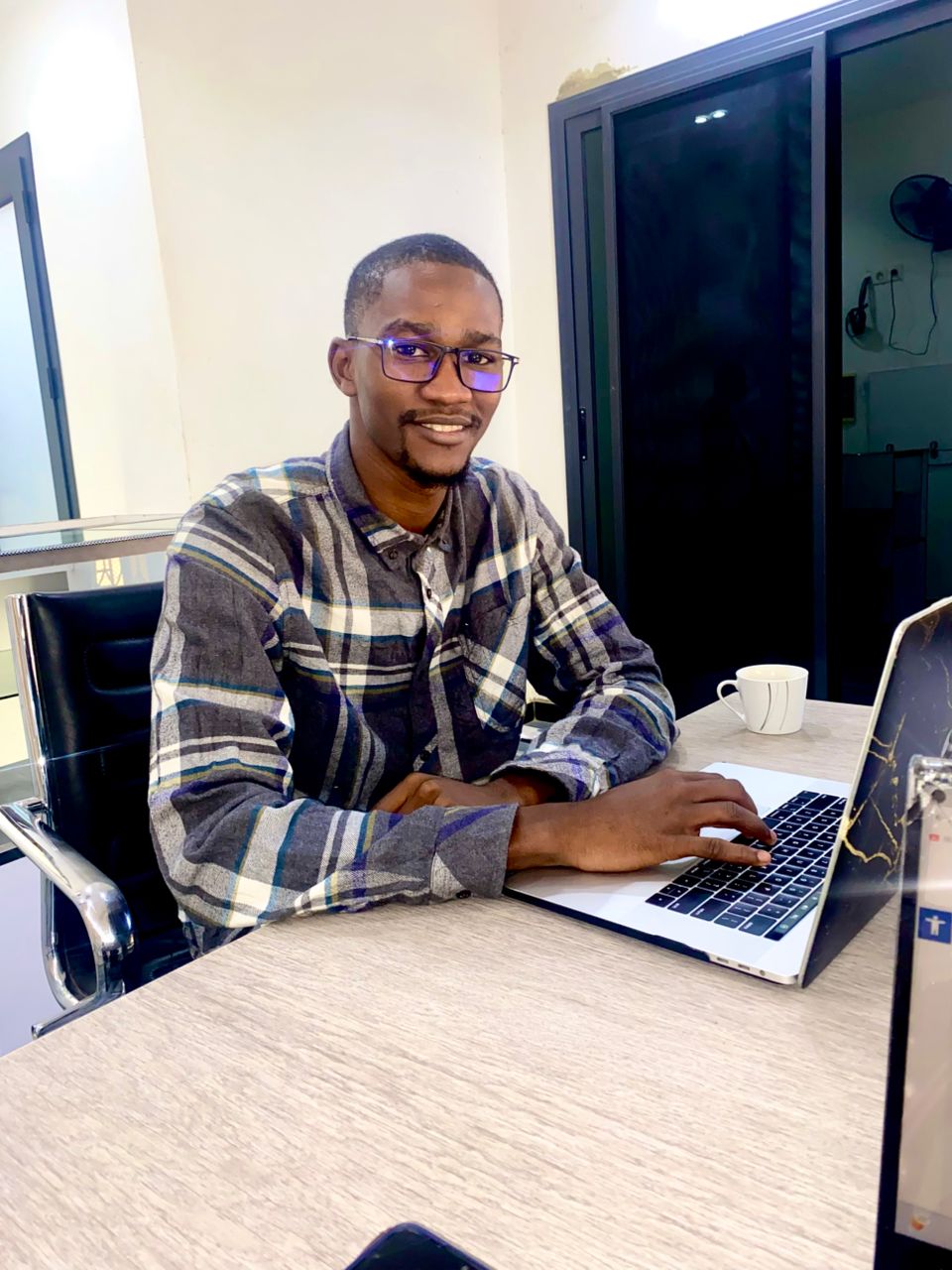
I am an AI Research Engineer based in Dakar, Senegal, focused on building rigorous, reproducible and explainable machine-learning systems that work under real-world, data-scarce constraints.
Growing up in Senegal, I saw first-hand how AI tools built for ideal laboratory conditions often break under real constraints, limited data, limited compute and limited connectivity. Closing that gap is what motivates my research.
My work spans computer vision, climate AI and geospatial analytics, from flood early-warning systems and railway predictive maintenance to biometric identity pipelines. I care deeply about Human-Centered AI and AI for Sustainable Development.
I hold a double-degree M.Sc. in Artificial Intelligence and Smart Technologies from UTT (France) and Université Iba Der Thiam de Thiès (Senegal), graduated with honours (mention Bien), and I am seeking doctoral and research opportunities.
Curious and driven by challenges, I enjoy exploring innovative approaches, learning new methods and designing AI solutions tailored to concrete problems.
My long-term goal is to develop trustworthy, explainable and resource-efficient AI for environments where data, compute and connectivity are scarce, with a particular focus on Africa. I care about systems that are not only accurate, but deployable, auditable and genuinely useful on the ground.
Models whose decisions can be inspected, validated and trusted in high-stakes settings such as health, climate and critical infrastructure.
Robust visual recognition with small, imbalanced and low-quality data on limited hardware, from remote sensing to biometrics and video analysis.
Recommendation, forecasting and monitoring systems that help real users, citizens, clinicians, scouts, make better data-driven decisions.
Application domains: climate resilience and early-warning systems, health diagnostics, critical infrastructure, and sports analytics & talent detection, the latter explored through my applied platform BibaFoot.
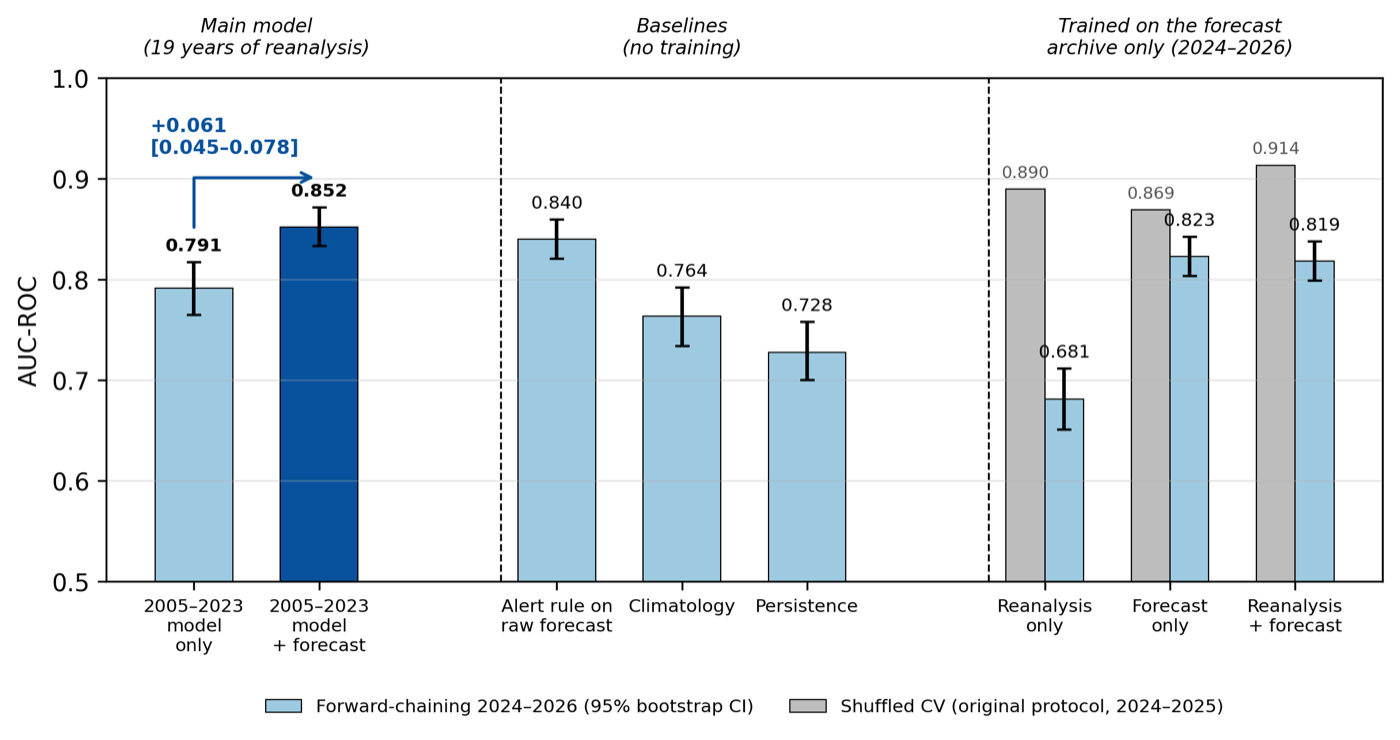
Research question: how can machine learning and computer vision support reliable flood early warning under data scarcity and limited computational resources?
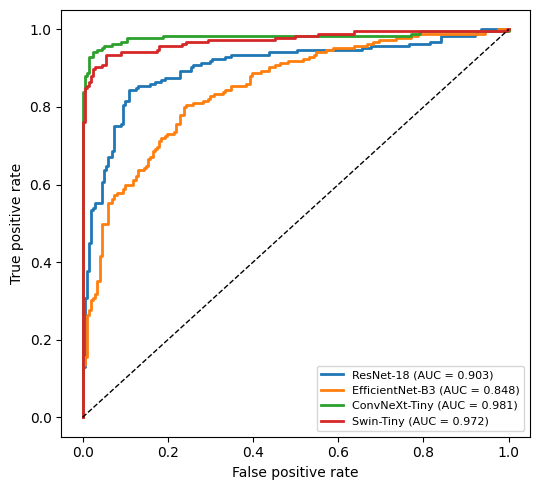
AI-powered identity document verification, built for the ANIP Benin Challenge 2025 (Agence Nationale d'Identification des Personnes). Finalist. Final presentation at the Palais des Congrès, Cotonou, November 2025. The system implements three complementary biometric tasks; the value lies in a rigorous, honest methodology under real-world constraints (CPU-only training, small and imbalanced datasets).
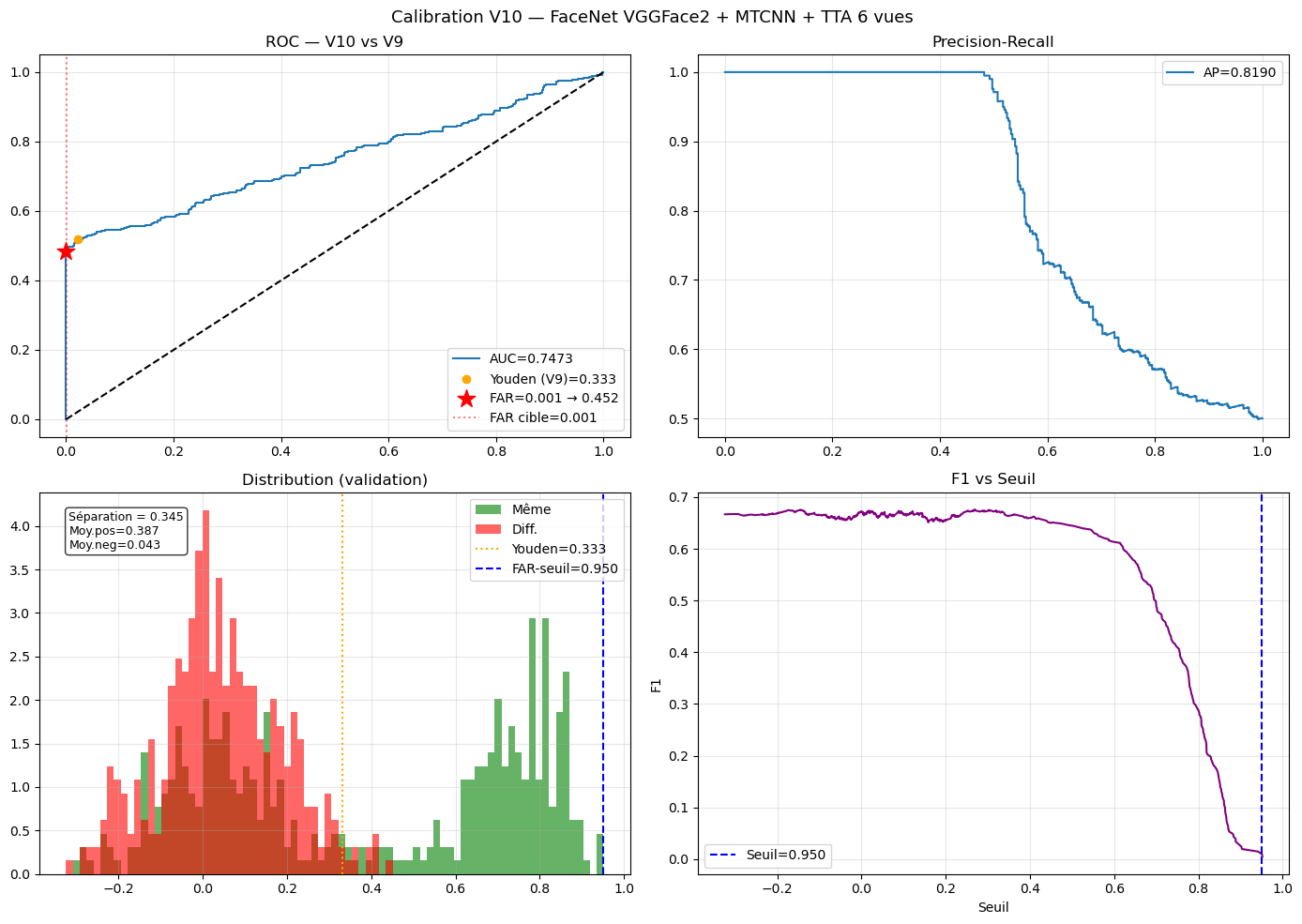
Facial recognition and identity verification on official documents. Iterated from a Siamese network (contrastive / BCE) to metric learning with Triplet Loss + hard-negative mining, then to MTCNN face alignment + FaceNet embeddings with 6-view Test-Time Augmentation and FAR-calibrated thresholds (V2 → V10).
Deep-learning regression for age estimation from facial photos, trained on 40,012 images (17,417 identities). EfficientNetB0 backbone with transfer learning, 30 epochs and ReduceLROnPlateau scheduling.
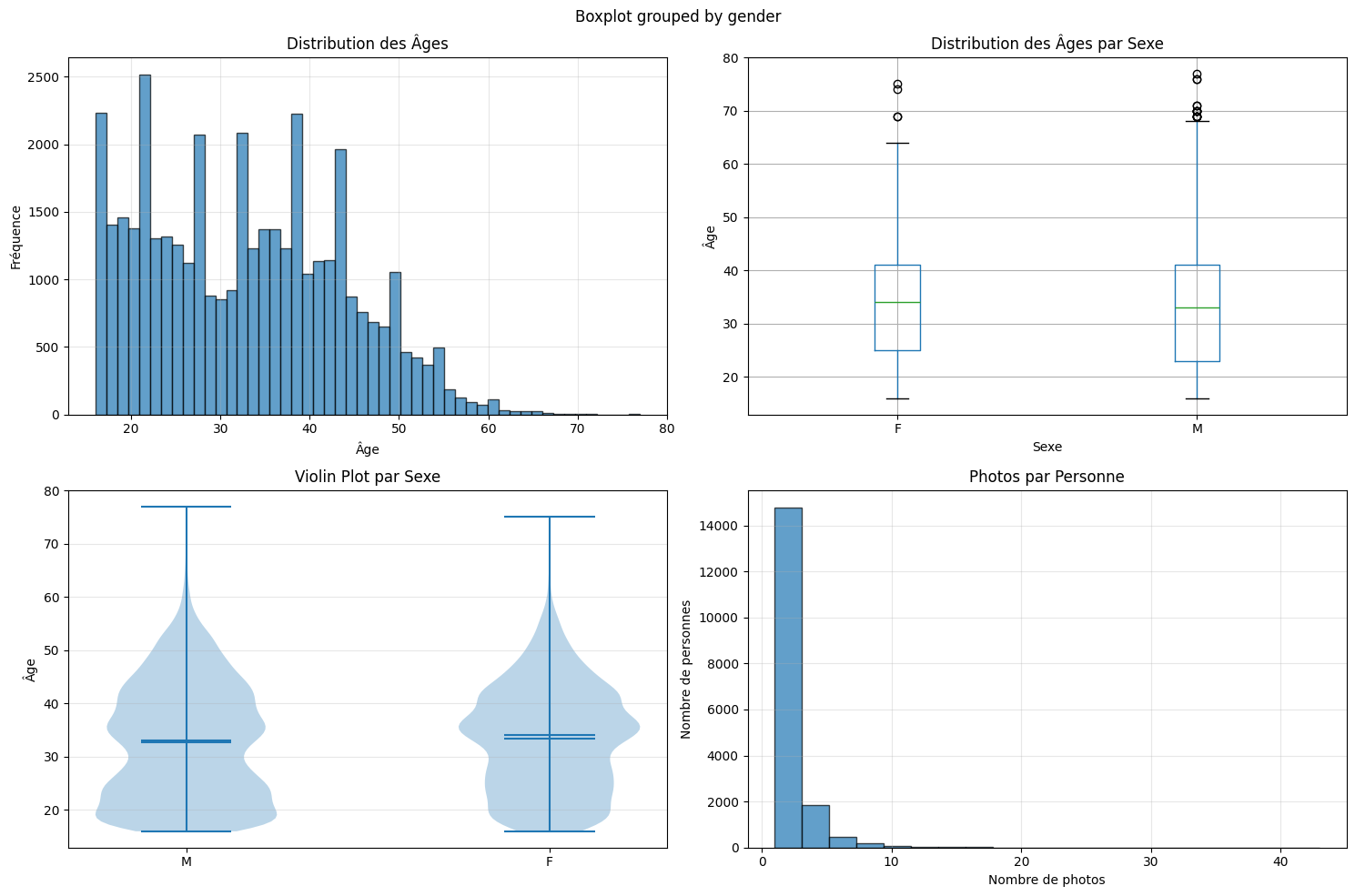
Five-class fraud classification on identity documents from 4 countries (arizona_dl, esp, est, rus). Two versions: EfficientNetB0 baseline (v1) → EfficientNetV2B0 + Cosine Decay with advanced augmentation (v2), CPU-only.
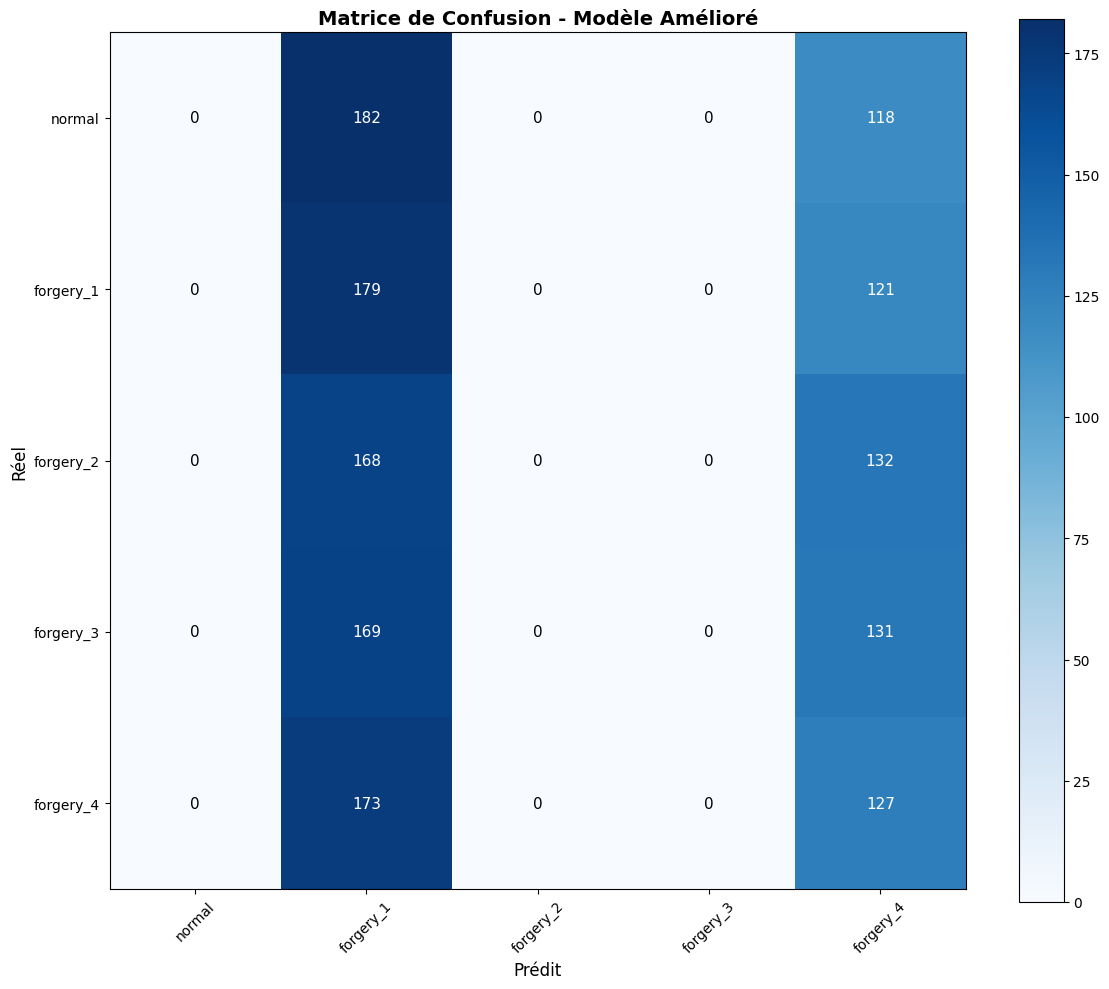
Key learning: real-world biometric AI is genuinely hard: face verification needs robust embedding spaces, age estimation degrades on small/imbalanced data, and 5-class fraud detection with limited data resists easy gains. The value is in the methodology, not just the metrics.
AI-based predictive maintenance of railway infrastructure. Investigated single-stage detection (YOLO family) for structural defect identification, tackling class imbalance and small-object detection; built reproducible annotation & dataset-curation protocols and ran ablation studies.
Personalisation & recommendation for educational technology. Designed an ML-based pedagogical recommendation module and built the full experimental + production stack (data pipeline, backend, deployment), bridging research prototypes and Human-Centered AI.
Graduated with honours (mention Bien). M1: 12.69/20 · M2: 15.56/20 · Thesis defence: 16/20.
Foundations in software engineering, algorithms and systems.
Empirical study of YOLO-based pipelines for automated identification of railway track defects. The pipeline combines YOLOv8 detection, OpenCV segmentation and a rule-based logic engine to flag displaced fasteners under realistic operating conditions.
Finalist. A 3-task biometric system: Siamese face matching, deep age estimation and 5-class document-fraud detection across 4 countries. See the dedicated breakdown below.
See full breakdown ↓Streaming ingestion & processing architecture (Apache Spark Streaming) for high-frequency environmental data as a substrate for climate-aware decision-support systems.
Geospatial experimentation from my flood-mapping work in Senegal: I exploited Sentinel-2 spectral bands (B03, B04, B08 and SWIR B11/B12) to compute water and vegetation indices (NDWI, MNDWI, NDVI) and study before / during / after flood periods over Keur Massar, Kaolack and Kaffrine. Built in Python with rasterio and GeoTIFF rasters, plus Google Earth Engine and geemap. The same spectral-index pipeline, NDVI in particular, is directly relevant to vegetation monitoring and can support agricultural mapping when combined with suitable data and methodology.
Gradient-boosting credit-scoring models (LightGBM, XGBoost, Random Forest) and a neural-network scorer with advanced feature engineering and cross-validated tuning, developed for the national phase of the pan-African data science competition.
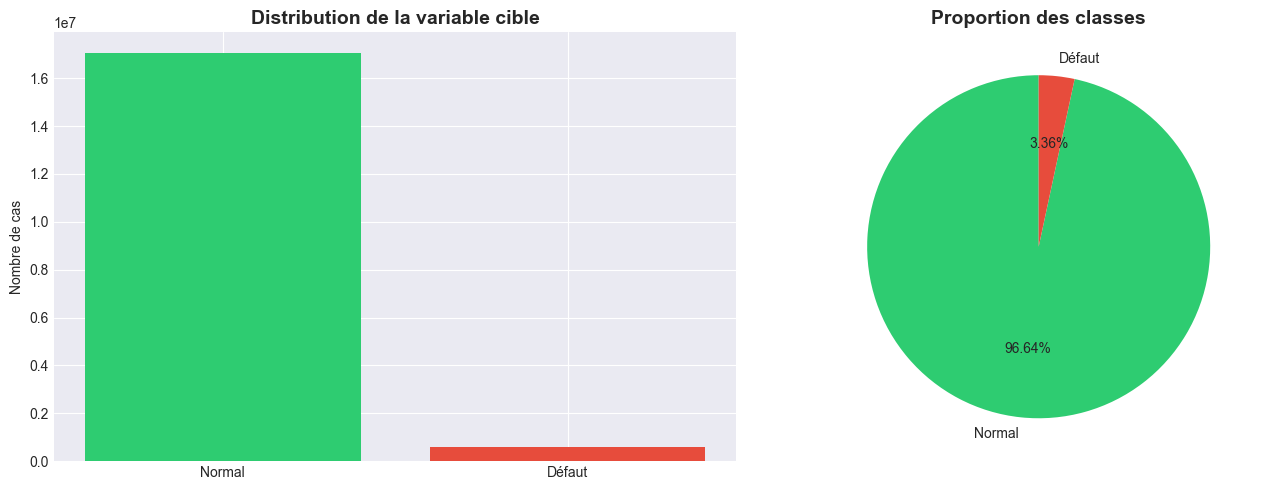
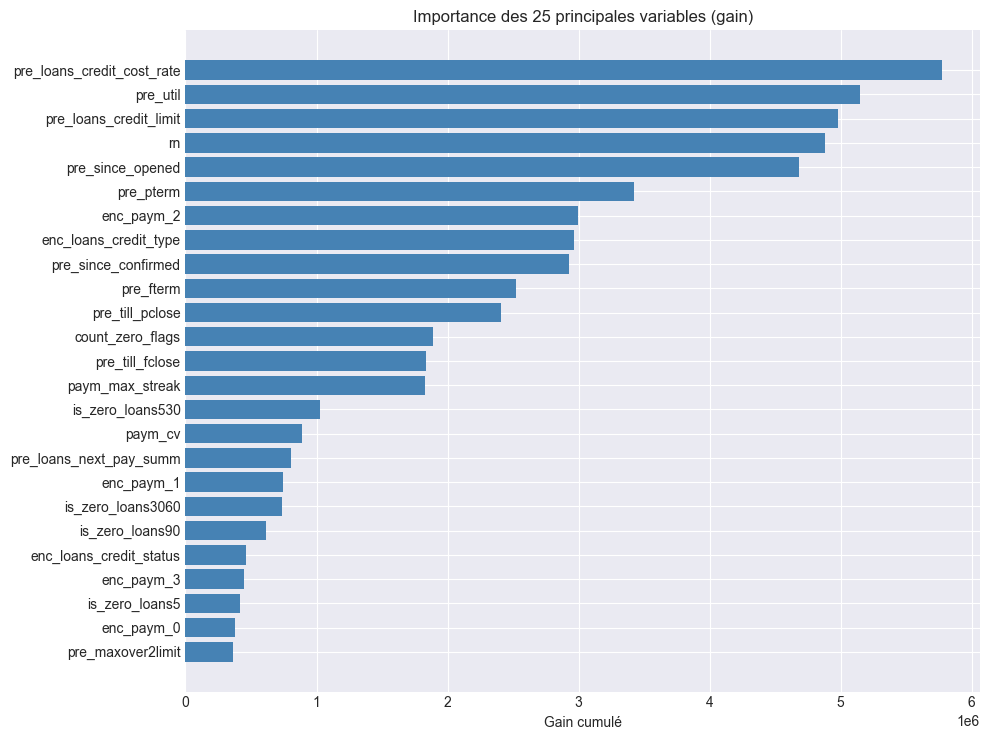
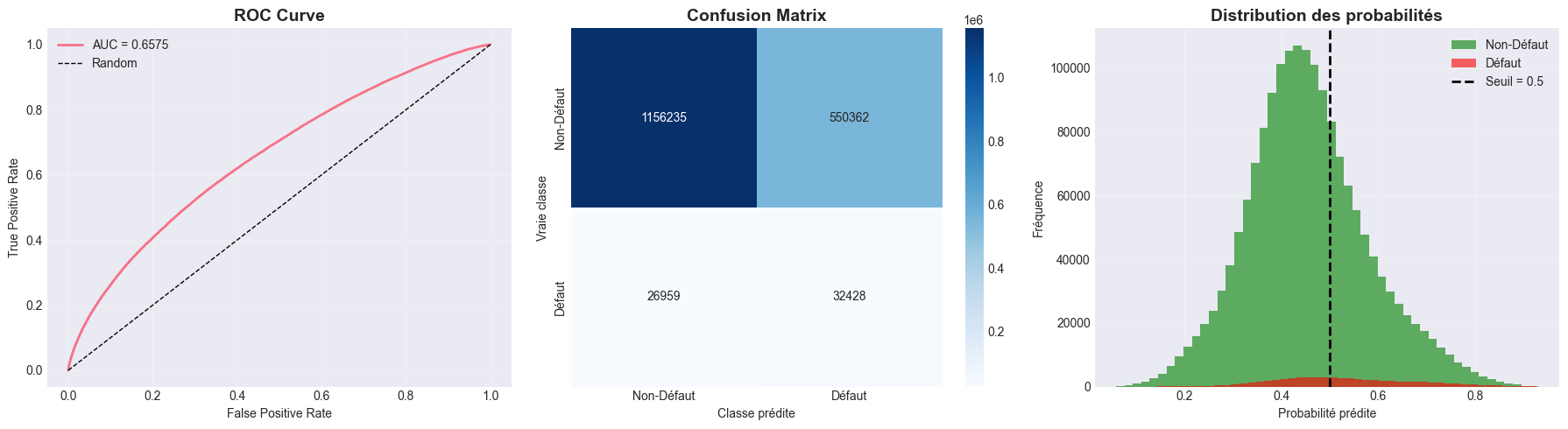
Second place at the national ranking (team Hackatsuki) at DataTour 2026: a CatBoost fraud detector for mobile-money transactions, scored on Average Precision. The winning recipe leans on fold-safe target encoding (the sender's historical fraud rate) and strict temporal validation to avoid account-ID leakage, with a CV-to-leaderboard compass to iterate offline and submit only proven gains. Ranked 2nd nationally (Senegal), just behind the champion.
CNN classifier for malaria parasite detection on blood-smear microscopy images, deployed as a real-time web interface to assess AI-assisted diagnostics in low-resource clinical settings.
A YOLO11 object detector for automated visual quality control of cardboard boxes: it localises and classifies each box as normal, cracked, opened or wet (anything not normal is flagged as a defect), trained on ~3,000 annotated images across four classes. It reaches mAP50 88.4% and mAP50-95 79.3% on the held-out test set, served through a Streamlit app for real-time inspection.
An open-source "operating system" for scientific research: 14 specialised AI agents run as pipelines or drag-and-drop workflows, a multi-model router picks the LLM by cost, speed, quality and privacy (OpenAI, Anthropic, Gemini, Ollama, Groq and more), and a hybrid BM25 + dense RAG answers with citations. Live literature search across arXiv, OpenAlex, Semantic Scholar, CrossRef and HAL. Used in my own research: it verified the DOIs of my flood-forecasting article's bibliography. Flask + Celery/Redis + PostgreSQL back-end, React 19 front-end, 96 automated tests.
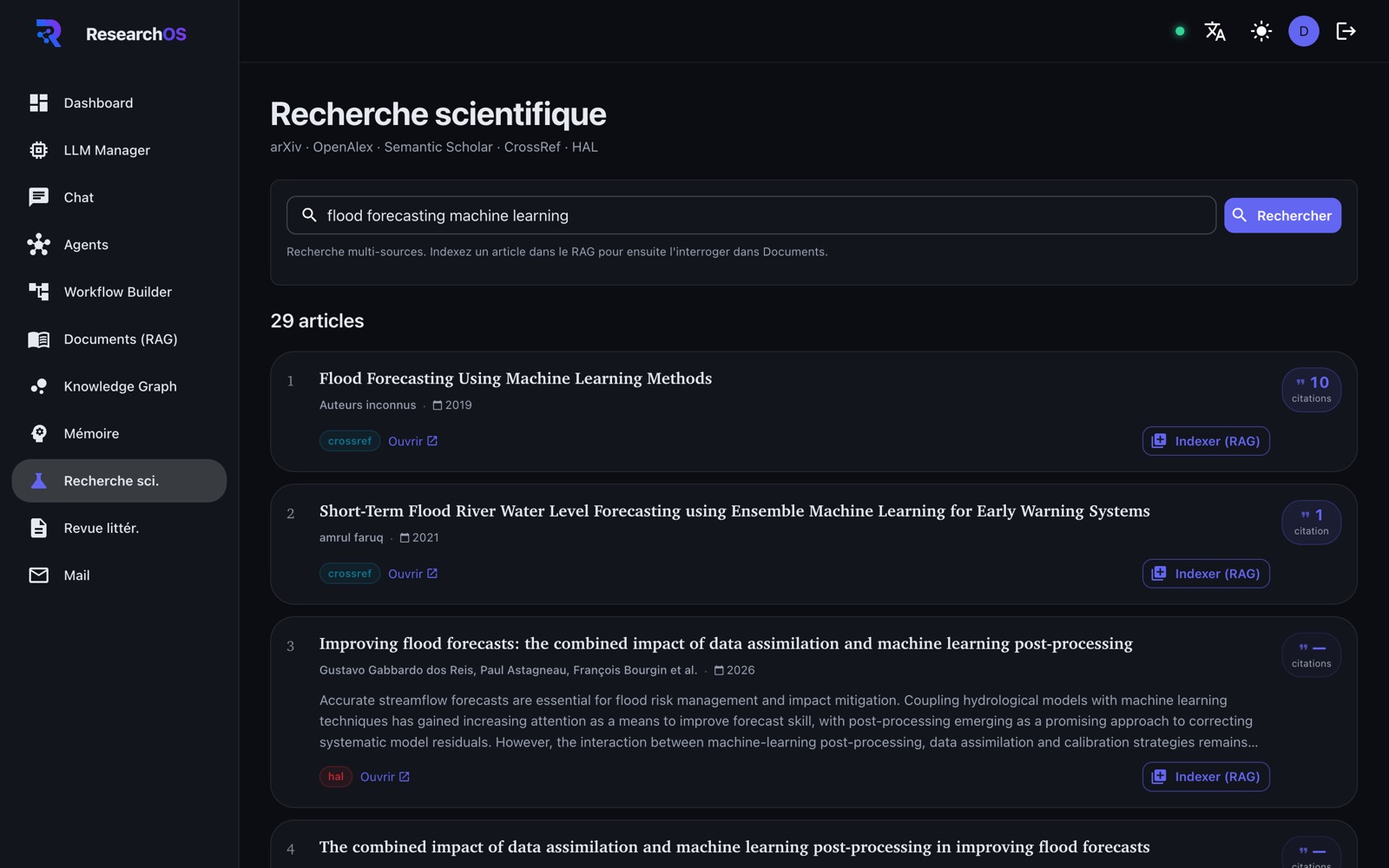
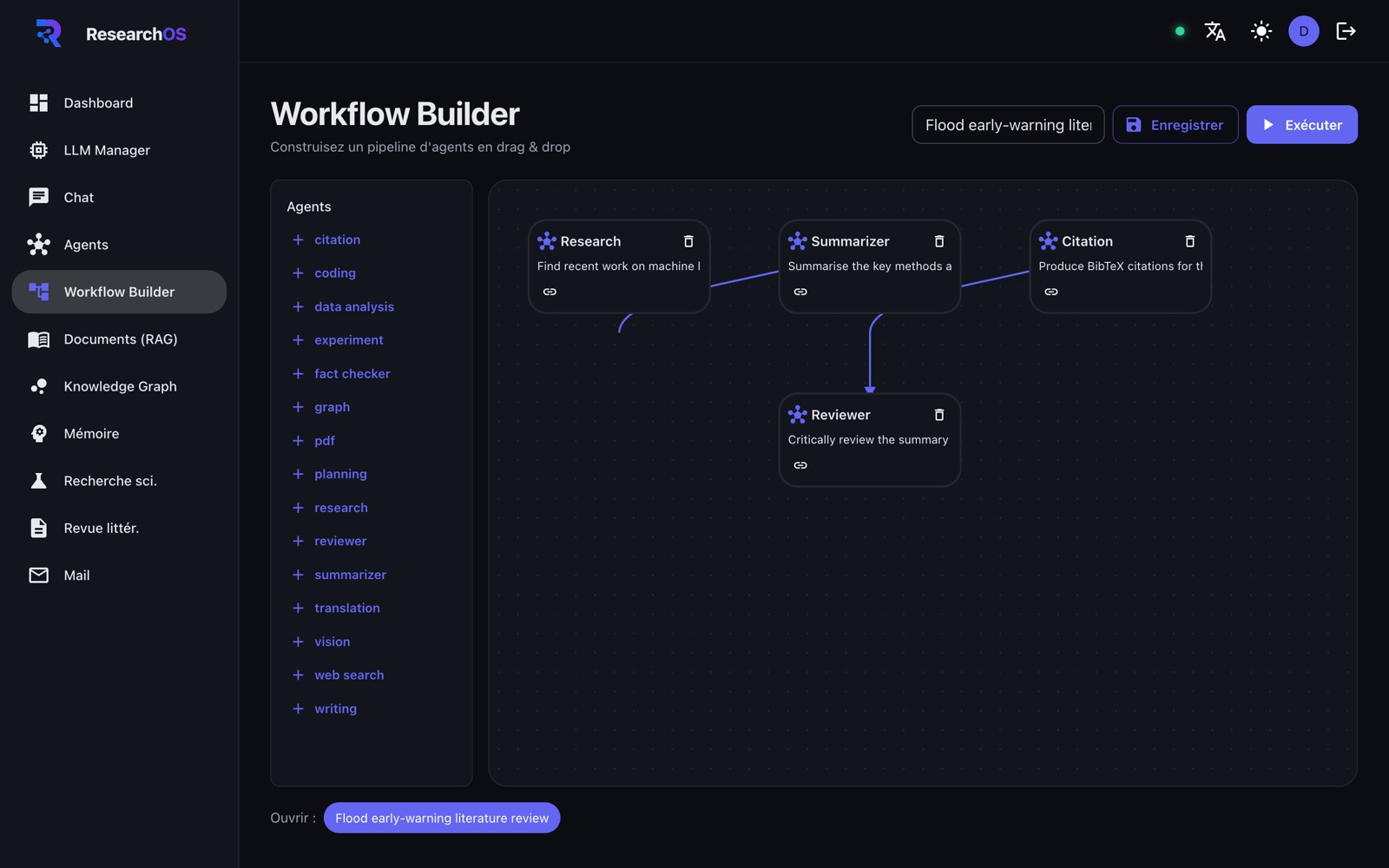
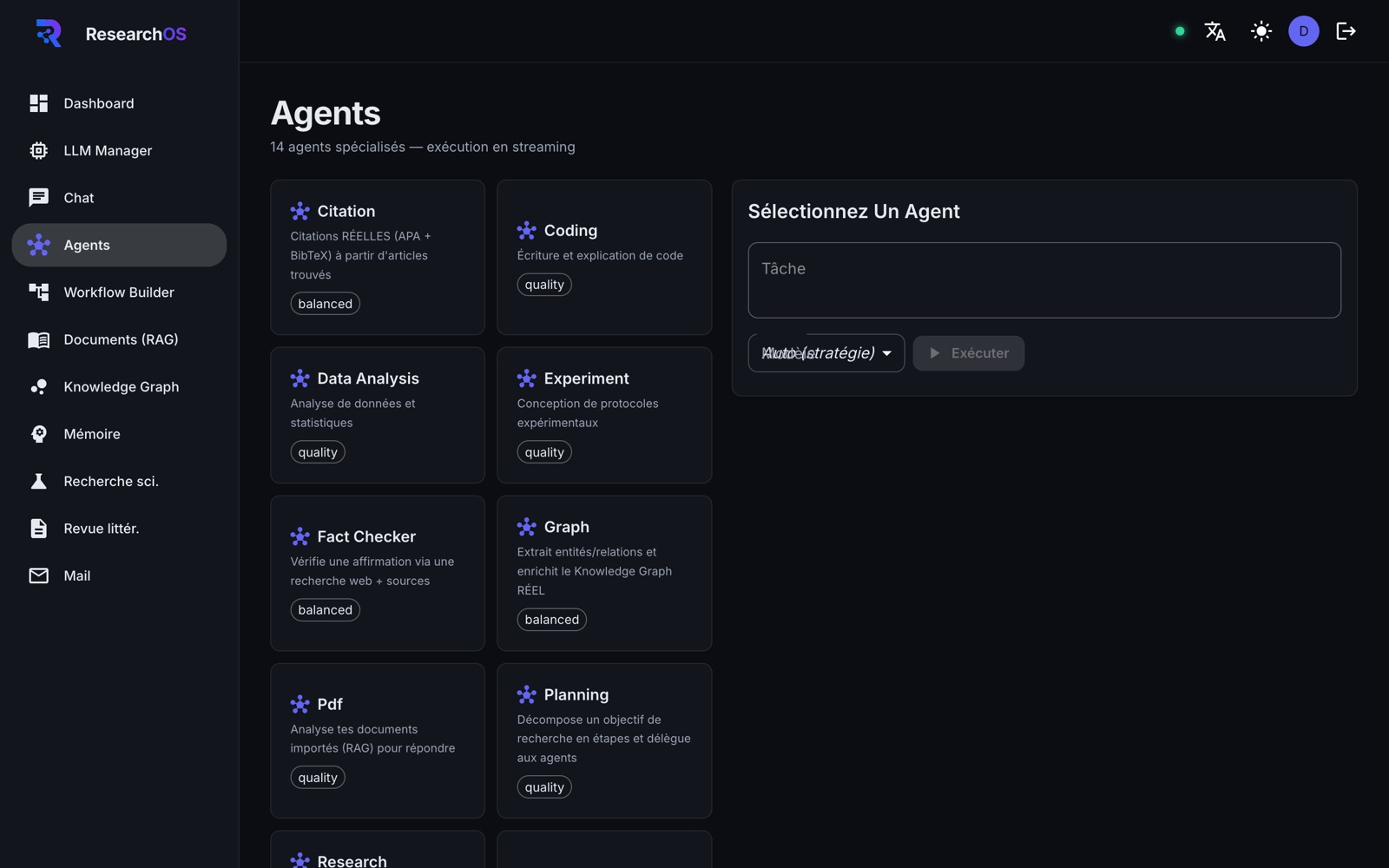 Literature search across 5 sources · agent workflow builder · 14 specialised agents
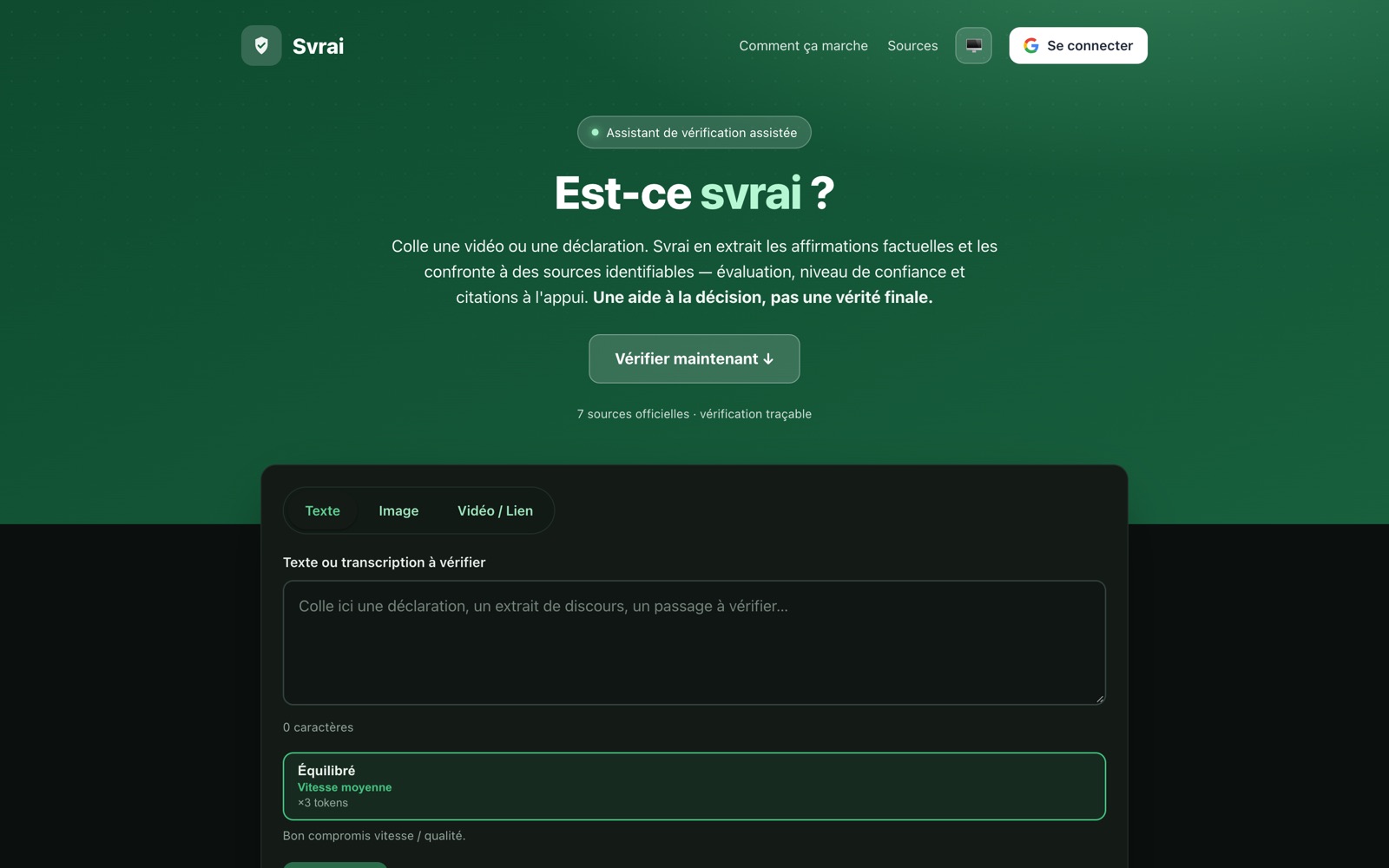
Paste a video, audio file, link or text: Svrai transcribes it (Whisper, plus a Wolof speech model for local content), extracts the factual claims with an LLM, and checks each one against official sources through 8 source plugins (World Bank, OpenAlex, CrossRef, Wikidata and more) and targeted search on official domains. Each claim gets a transparent verdict (corroborated / uncorroborated / contradicted / uncertain) with a confidence level, citations and reasoning, never the model's memory alone. FastAPI + React, user accounts, 25 automated tests.
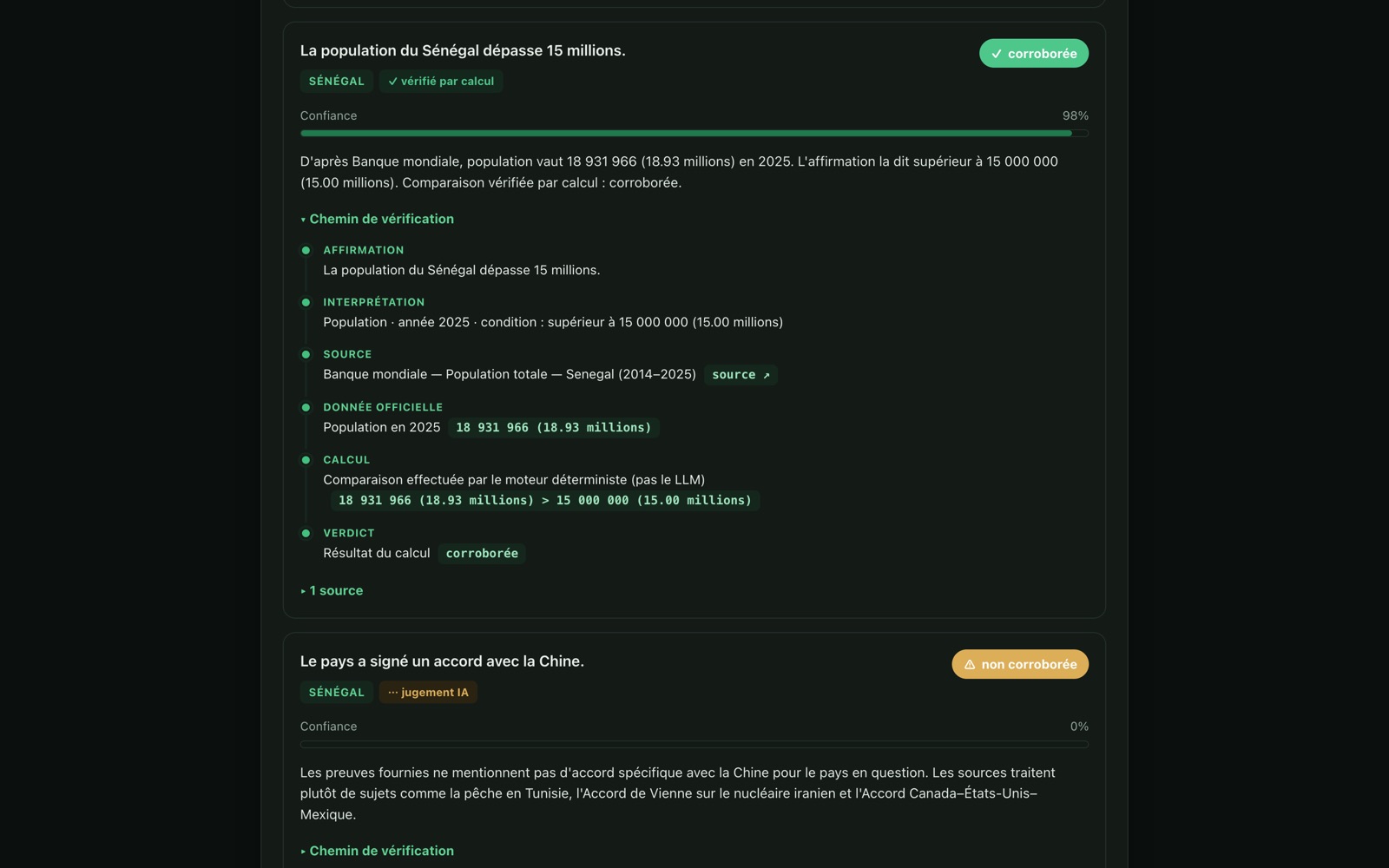
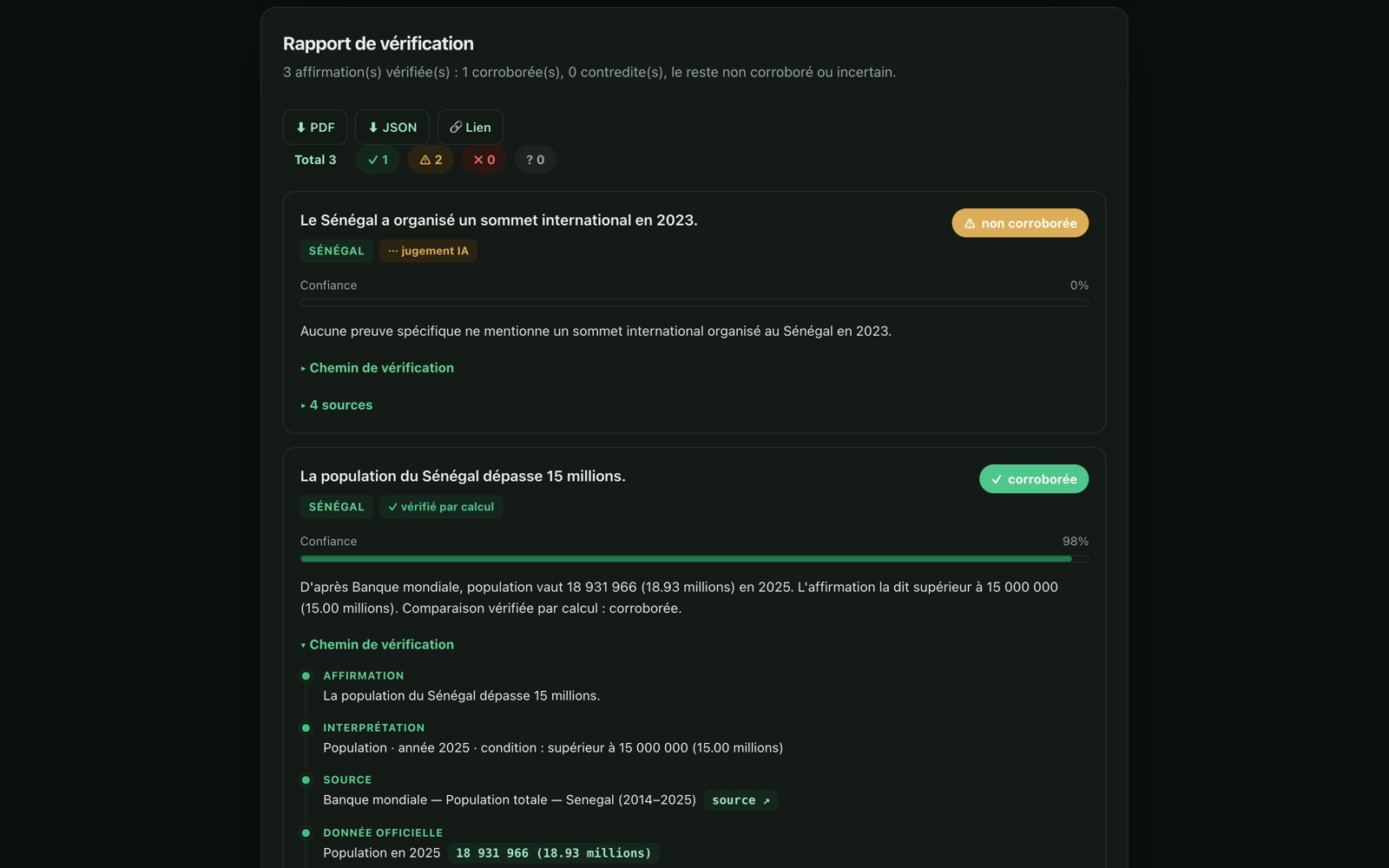 Traceable verdict: the figure comes from the World Bank and the comparison is computed, not generated by the LLM

A live football-management platform used as a testbed for applied AI: recommendation, performance analysis and decision support for players, clubs and recruiters.
Open live ↗Open to PhD positions, research collaborations and applied AI engineering roles, especially in computer vision, climate AI and AI for sustainable development.
Dakar, Senegal